
A world in constant war, an energy bill under stress
The world has never experienced so many armed conflicts since the end of the Second World War. According to the International Committee of the Red Cross (ICRC) and the Oslo Peace Research Institute, more than 130 wars were active in 2025, more than twice as many as fifteen years ago. In sub-Saharan Africa, nearly fifty of these clashes are taking place simultaneously, from the Sahel to coastal countries such as Benin, now under jihadist pressure.
In Eastern Europe, the Russian-Ukrainian conflict entered its fifth year in 2026, with no resolution in sight despite ongoing negotiations. In the Middle East, the situation remains precarious between Gaza, Lebanon and tensions around Iran. In Latin America, Venezuela is the focus of attention after a major escalation at the beginning of the year. In the South China Sea, military maneuvers around Taiwan are intensifying, while Japan has increased its defense budget to 50 billion euros for 2026.
This accumulation of sources of instability has a direct and tangible consequence for any professional or boater Who is sailing: the volatility of oil prices.
The price of marine fuel, a hostage of geopolitics
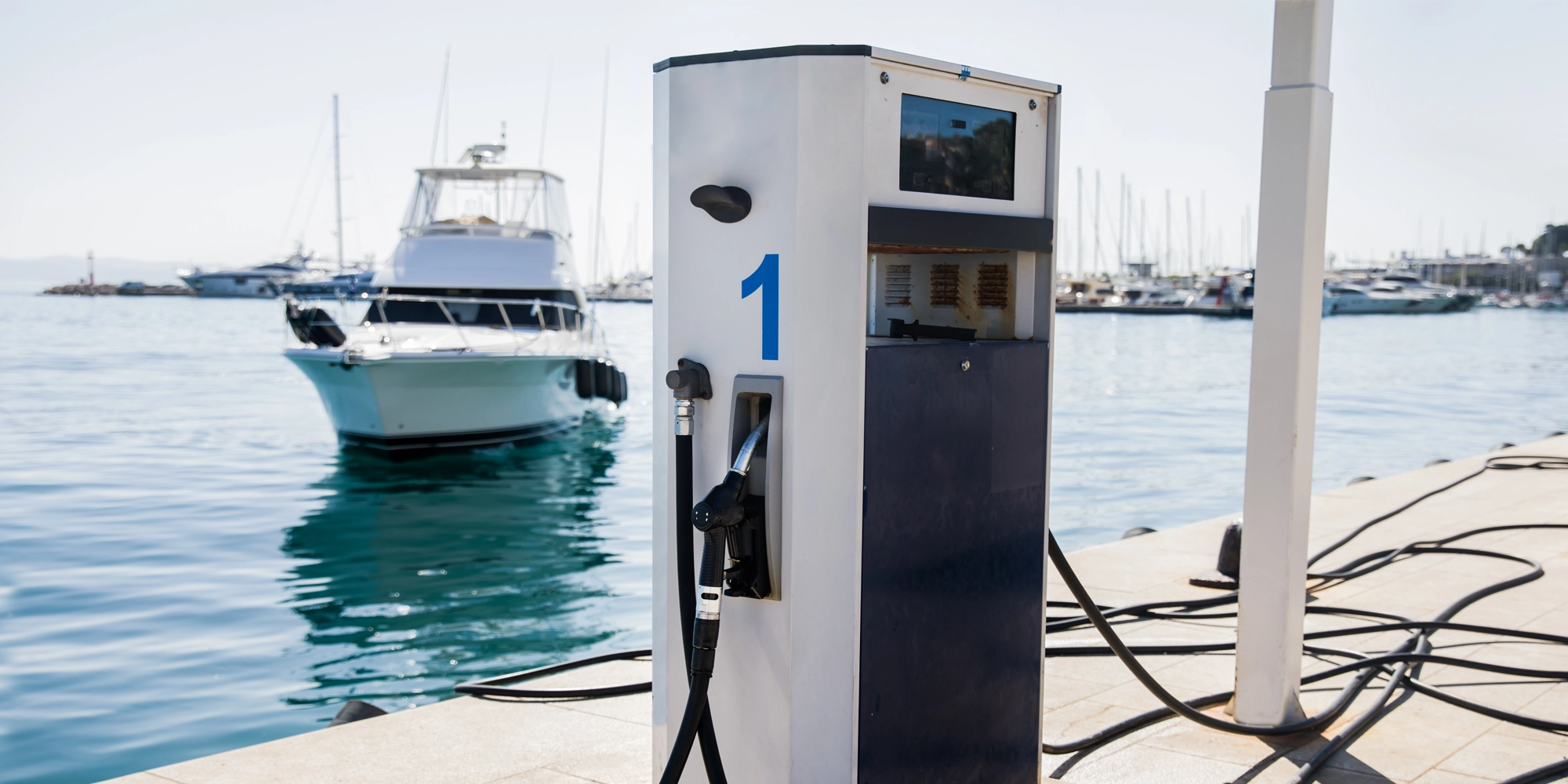
Les oil supply routes pass through strategic straits — Hormuz, Bab-el-Mandeb, Red Sea — regularly disturbed by conflicts. Each military escalation lengthens the routes of oil tankers, strains the crude markets and has a mechanical impact on the fuel pumps in marinas.
In 2026, the rates charged in French harbor master's offices bear witness to this reality: at the port of La Rochelle for example, diesel is displayed in €1.77/liter and the SP98 at €1.88/liter. At the national level, average prices range between 1.65 and 2.05 €/liter depending on fuel and the region. In addition, the new European directives FuelEU Maritime, which came into force in 2026, exert additional fiscal pressure on fossil fuels through carbon taxation.
An upward trend that is not sparing boaters.
As for motorists, the price of marine fuel directly follows oil fluctuations. When prices increase at the pump for cars, marinas also pass on these increases. However, the The consumption of a boat is generally much higher than that of a car : where a car consumes an average of 6 to 8 liters per 100 km, a boat can burn several tens of liters per hour.
For a outboard motor boat of 150 hp, the consumption is around 30 to 40 liters per hour at full speed. For a inboard motor 200 hp diesel when cruising, count 20 to 24 liters/hour. Over a nautical season of a few dozen hours, the fuel bill easily exceeds several thousand euros — even before starting maintenance.
This economic equation, coupled with structural geopolitical uncertainty, is driving a growing number of professional seafarers and boaters to consider a sustainable alternative: 100% electric propulsion.
Especially since technologies are progressing rapidly. Les new generations of batteries And of charging systems now allow very fast recharges: some solutions allow significant autonomy to be recovered in just fifteen minutes. An evolution that progressively brings the use of the electric boat closer to the ease of use that boaters are looking for.
Marine electric motorization: an economic and ecological response
Facing theThe instability of hydrocarbon prices, the logic of electric motor for boat is unstoppable: zero fossil fuel, zero dependence on global oil markets. The cost of electric recharge is structurally stable and unrelated to geopolitical tensions in the Middle East or in the Strait of Hormuz.
On the environmental level, thetotal absence of direct CO₂ and hydrocarbon emissions preserves the quality of aquatic ecosystems. This is a growing necessity as regulations are tightening and areas of Navigation prohibited to internal combustion engines are multiplying — lakes, nature reserves, sensitive port areas.
The silence of navigation is also a competitive advantage notable for nautical tourism, fishing or passenger transport professionals : the absence of engine noise transforms the onboard experience.
Weenav: electrification made in France
Weenav quickly established itself as a leading player in electric motorization for boats. The young company structured its offer around two complementary ranges — KRONOS and ARION — designed and assembled in France, covering a broad spectrum of maritime and river uses.
Profitability and financing: a quick investment to amortize
The initial investment in a Weenav electric motorization varies according to the power and the type of engine chosen, with financing solutions onwards 747€ per month, batteries included, excluding any aid. An amount to be put into perspective with the savings made on fuel — up to 80% reduction in energy costs — and the virtual elimination of maintenance costs.
The electric retrofit also presents a environmental advantage little known: it allows reduce greenhouse gas emissions by 56% related to the manufacture of a new boat. Converting an existing boat is therefore doubly relevant, both economically and ecologically.
Of funding mechanisms exist to facilitate access: specific grants for professionals sailing in inland waters or maritime areas, loans at zero interest rates via partner organizations, and bank financing solutions offered directly by Weenav.
Electric propulsion, a structural response to an unstable world
LGlobal geopolitical instability is not conjunctural. Crisis Group analysts, like those at the ICRC, agree on a fundamental trend: conflicts are lasting longer, becoming more complex and their economic effects — particularly on energy prices — are lasting.
For the nautical sector, this reality invites us to rethink dependence on hydrocarbons not as a green option among others, but as a strategic choice for economic resilience. To navigate with an electric motor is to navigate outside the cycles of oil volatility dictated by conflicts that cannot be controlled.
With its KRONOS and ARION ranges, Weenav offers demanding boaters as well as boating professionals a technically mature, economically rational and environmentally responsible response. A proposal that, in the context of 2026, resonates with new relevance.
To find out more about Weenav electric motorization solutions and configure your project, contact us
Published on: 05/03/2026
Editor: Sophie Castelain

