
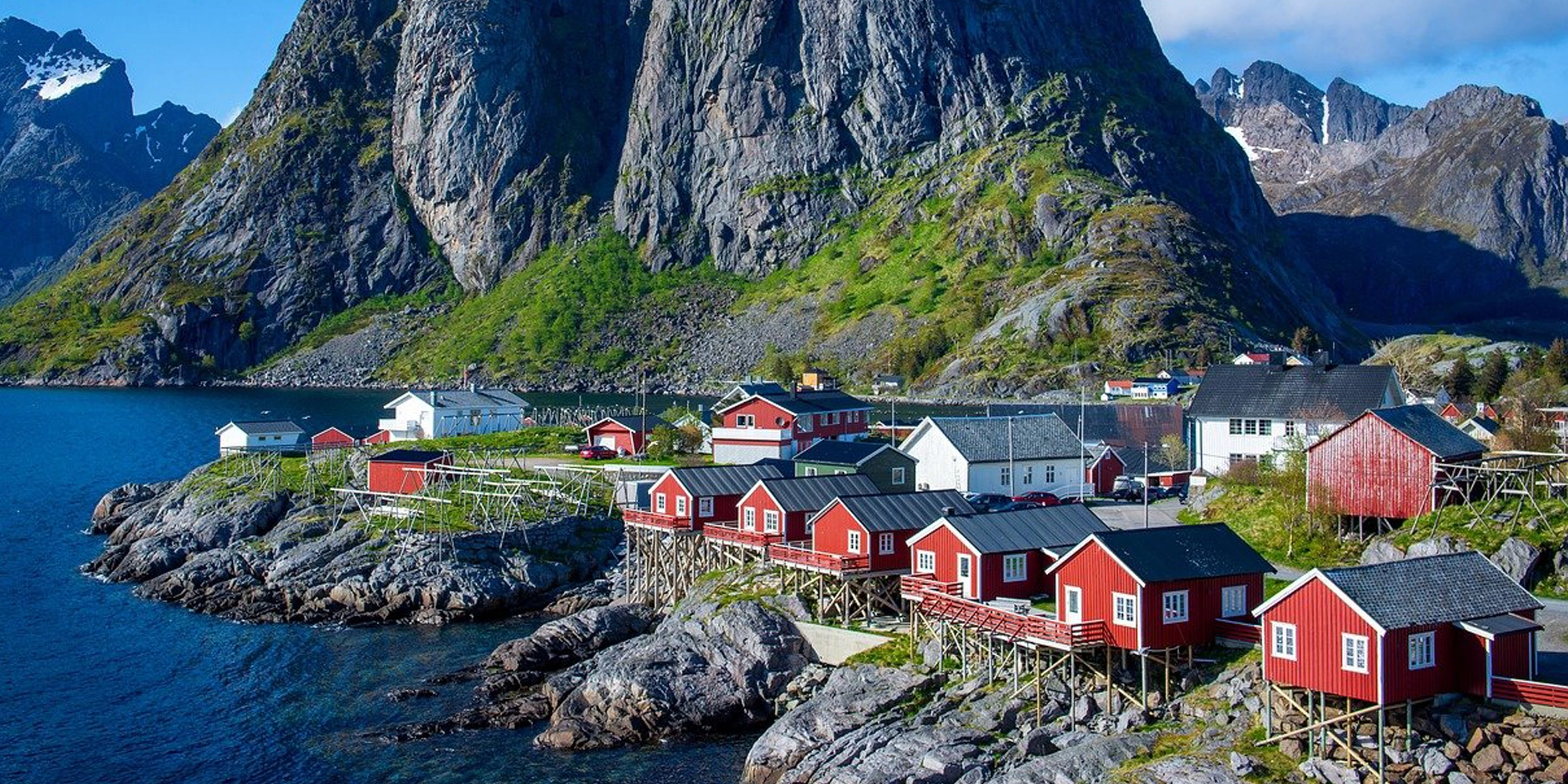
Norway, a pioneer in sustainable maritime transition
With its 25,000 kilometers of coastline, its vertiginous fjords and its archipelagos pushed up to the Arctic Circle, Norway is one of the most spectacular destinations in Europe. But sailing there also means entering a rapidly changing country: driven by an assumed environmental emergency and disruptive innovations, the Norwegian maritime sector is reinventing itself in depth. From the first anchorages to the most stringent environmental regulations in Europe, navigation in Norway is becoming a model of energy transition applied to maritime transport.
A coastline with many faces: Where to sail in Norway?
Norway offers a diversity of nautical destinations that are rare in Europe. The Western Fjords (Geirangerfjord, Nærøyfjord, Aurlandsfjord), classified as a UNESCO World Heritage Site, are the leading maritime tourism destinations in Norway. Their deep waters, rock faces and waterfalls make them technical navigation areas, now navigated by fully electric vessels. Further north, the Lofoten archipelago attracts experienced boaters, with strong currents and strong tides that require good control. Tromsø and the Far North, for their part, offer a favourable environment for polar expeditions and the observation of marine fauna. Finally, the Oslo Fjord and inland waterways (Lake Mjøsa, Telemark Canal) are accessible alternatives, suitable for quieter navigation.
This vast and varied territory is also one of the best managed in Europe. Before sailing in Norway, it is essential to know the legal framework in force, both for safety reasons and to comply with Norwegian maritime environmental standards.
Maritime regulations in Norway: what you need to know before sailing
Driving license and conditions
The Norwegian system is pragmatic: no license is required to pilot a boat under 8 meters whose speed does not exceed 10 knots. Beyond these thresholds, or for anyone born after 1 January 1980, Båtførerbevis becomes mandatory. European permits are recognized, but it is strongly recommended to include an official translation to facilitate possible checks. The Norwegian weather, which is subject to rapid changes, also requires constant vigilance, especially on the high seas and in exposed fjords.
The “zero trace” philosophy: a pillar of Norwegian maritime practices
Beyond the rules of conduct, Norway applies a environmental philosophy enshrined in the law. Safety distances with wildlife are strictly regulated: 200 meters with cetaceans, 50 meters with nesting birds, any intentional approach being forbidden. LShore power supply is mandatory as soon as the infrastructure allows it, and speed limits apply in sensitive areas to protect aquatic biodiversity from noise pollution. These rules reflect a strong conviction: the development of maritime activities must be compatible with the protection of marine ecosystems.
The zero emissions mandate: a global maritime revolution
Since 2026, the Norway imposes zero emissions in its most iconic fjords. By adopting this legislation, which has no global equivalent, Norway has transformed its five UNESCO fjords (Geirangerfjord, Nærøyfjord, Aurlandsfjord, Sunnylvsfjord and Tafjord) into exclusion zones for all polluting vessels. These sites, which welcome between 800,000 and 1 million visitors per year, become the first protected maritime territories by a legal obligation to navigate without emissions of CO₂ or methane.
Zero Emissions Implementation Calendar
The Norwegian Parliament has set two deadlines to allow the industry to adapt:
- January 1, 2026: mandatory zero emissions for all passenger ships and ferries under 10,000 gross tons.
- January 1, 2032: extension to large cruise ships, for which large-scale technologies are still under development.
The law is deliberately technologically neutral: it does not impose batteries or hydrogen, but simply requires the total absence of CO₂ and methane. Only biogas is accepted as an alternative, under very strict conditions: the boat must be refuelled in the month prior to entering the fjords, separated from any fossil fuel, and without recourse to mass balance certificates.
Beyond CO2 : the challenge of underwater noise
This mandate is not just about air quality. It also attacks the underwater noise pollution, long underestimated. Thermal engines emit vibrations that interfere with cetaceans' communication and modify the behaviors of aquatic fauna. Les electric and hydrogen-powered vessels drastically reduce these nuisances, offering an infinitely more pleasant wildlife viewing experience for passengers on board.
To meet these requirements, the maritime industry has not only adapted: it has innovated. And the solutions that are emerging today are already shaping the contours of what tomorrow's global navigation will be like.
From Norwegian innovation to industrial action
Norway has established itself as a global laboratory for clean propulsion. High-capacity batteries, green hydrogen, autonomous ships: projects like the Hinnøy ferry, the electric cargo ship Yara Birkeland or the Sea Zero program led by Hurtigruten demonstrate that zero-emission navigation is now an industrial reality.
Beyond technological innovation, the message is clear: the Maritime transition is under way. It is regulatory, operational and economically structuring. Shipowners, port authorities and operators must now anticipate.
It is precisely in this context that Weenav.
Weenav: French pioneer in high-power electric propulsion
Specialist in electric propulsion, Weenav is developing solutions adapted to intensive professional uses :
- Port shuttles and water taxis
- Passenger transport to the islands
- Inshore fishing boats
- Service boats
- High-end yachts and units
En river navigation, theElectrification also opens up major opportunities : pleasure boats, urban shuttles, electrified barges or floating habitats, with a direct environmental benefit on air quality and the reduction of bank erosion.
Through systems of 100% electric propulsion Like the KRONOS (high power outboard) and the ARION (integrated inboard solution), Weenav offers solutions for efficient electric motors, silent and immediately compliant regulatory changes.
Anticipate rather than suffer
Regulations such as those implemented in Norway herald an inevitable evolution in the sector. Electrification is no longer experimental: it is technically mature, economically viable and strategically necessary.
Weenav supports professionals and individuals in this transition with a pragmatic approach: power, reliability, tailor-made integration and a long-term vision.
La zero emission navigation is no longer a projection.
It is already in service.
Posted on 12/02/2026
Editor: Chloé QUITTOUD

