
Electric boating enters a new era
Skip to the electric or hybrid propulsion on water is no longer an ecological compromise. Today, it is a choice of performance, reliability and sustainable savings. But behind everything marine electric propulsion system, there is one essential technical truth: battery quality is everything. It is precisely on this point that Weenav has chosen to strike hard, by offering energy storage solutions designed exclusively for the requirements of the marine and river environment.
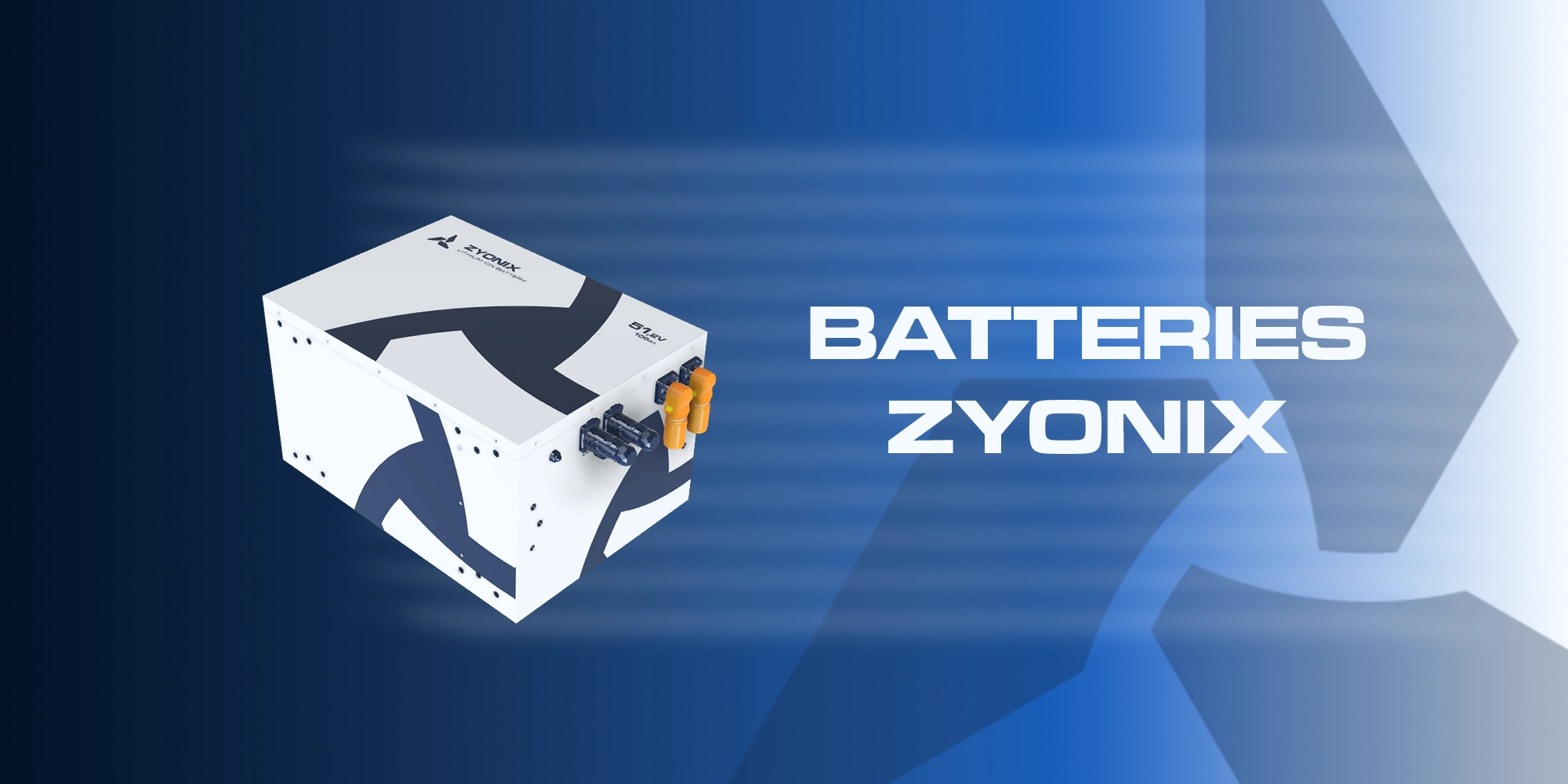
Zyonix by PowerTech: The Weenav reference battery partner
Les engines from the KRONOS range and the ARION range are offered as standard with Zyonix batteries by PowerTech, a technological partner selected for the quality and reliability of its solutions in demanding environments.
However, the Weenav philosophy is one of flexibility: KRONOS and ARION engines are compatible with any type of battery, offering total freedom of integration with shipyards, retrofit professionals, river fleet operators, passenger transport, electric boat rental companies and boaters who would like to maintain or integrate an existing storage solution A rare opening on a market that is still very proprietary.
Outstanding battery chemistry: The LFP Solid State
Les Zyonix batteries by PowerTech integrated by Weenav are based on the LFP SS technology — Lithium Iron Phosphate Solid State, recognized as the most stable and safest in the lithium family. La LFP SS (Lithium Iron Phosphate Solid State) technology combines intrinsically stable lithium chemistry with a solid electrolyte, offering a maximum level of safety, reliability and thermal stability, essential for nautical use far from immediate assistance.
On a boat, far from immediate assistance, this technical choice is not a marketing argument, it is a vital requirement.
Enhanced security. LFP chemistry has an extremely low risk of thermal runaway, significantly lower than that of NMC or NCA chemistries, making it one of the safest lithium solutions for nautical applications.
Record longevity. These batteries support up to 6,000 full charge cycles (0 to 100%), which represents an estimated lifespan of 30 years based on 200 uses per year. Today, no competing technology offers this endurance in a maritime context.
Certified marine resistance. Certified IP67, they withstand immersion of up to 1 meter for 30 minutes and work effectively in a temperature range of -20°C to +60°C.
Modular architecture: A tailor-made solution for each ship
One of major challenges of marine electrification is the physical integration of batteries into the hull, without degrading the behavior of the ship. The Zyonix by PowerTech system, as deployed by Weenav, is based on an intelligent modular design, directly articulated around the KRONOS and ARION range.
Each module weighs 49.5 kg, occupies 35 liters of volume and delivers 5.43 kWh. These units are distributed strategically in the hull to maintain the boat's center of gravity, regardless of the configuration selected.
The standard configurations are as follows:
KRONOS 80 & 110 → 8 modules → 43.4 kWh
KRONOS 150 & 200 → 10 modules → 54.3 kWh
KRONOS 250 & 300 → 11 modules → 59.7 kWh
ARION 50 & 100 → 8 modules → 43.4 kWh
ARION 150 & 200 → 10 modules → 54.3 kWh
ARION 500 → 26 modules → 141.2 kWh
This scalable architecture makes it possible to precisely adapt the energy capacity to the power of the installed motor, without unnecessary oversizing or compromising on autonomy.
Based on several independent modules, the system introduces a real energy redundancy : in the event of a failure of one module, the others continue to power the propulsion, guaranteeing the continuity of navigation and eliminating the risk of total failure.
Our batteries are BV Marine certified and meet the requirements of ES-TRIN as well as the regulatory divisions applicable to river and maritime transport.
Fast charging: The end of pontoon anxiety
The autonomy of an electric boat is not only measured in kWh on board, it is also measured by the ease of recharging during stopovers. Weenav designed his system to be compatible with existing port infrastructures and fast charging standards the most advanced.
AC charging (Type 2) : up to 22 kW on the classic three-phase sockets available in most French and European marinas. A comfortable evening recharge for the next morning.
Ultra-fast DC charging via the Combo CCS standard : the system's flagship technology. It allows you to go from 10% to 90% charge after 15 minutes, with a power up to 200 kW, or even 350 kW depending on the available infrastructures. The CCS (Combined Charging System) standard is today the reference fast charging protocol in Europe. Its adoption by Weenav directly anticipates the development of electrical port infrastructures, which is rapidly accelerating in French and European ports.
Energy management: Full control, at sea and at shore
Having a powerful battery is not enough if you cannot control it accurately. Weenav integrates a complete energy management system, designed for the comfort and safety of boaters and professionals.
On board, the Garmin EmpirBus interface centralizes all critical data on a touchscreen: state of charge, estimated battery life, consumption in real time. From the cockpit, the skipper has complete visibility on the available energy, without juggling several instruments.
Remotely, the integrated 4G module makes it possible, via a mobile application, to monitor the state of charge from the port or from home, to locate the charging stations available at the destination, and even to preheat the boat before boarding — a comfort directly inherited from the best electric cars on the market.
Environmental commitment: A battery designed over its entire life cycle
The ecological argument of electric propulsion goes far beyond the simple absence of discharges into water or into the air. Weenav takes a global approach to the life cycle of its equipment.
Electric retrofit — the conversion of an existing thermal boat to electric propulsion — makes it possible to reduce greenhouse gas emissions by 56% related to the manufacture of a new boat. Maintaining and transforming your ship rather than buying a new one: this is the most responsible approach there is.
At the end of life, the Zyonix batteries by PowerTech are 97% recyclable, an exceptional rate that ensures that the transition to electricity does not simply shift the environmental problem into the future.
Why choose Weenav for its electric navigation project?
Les electric propulsion systems multiply, but not all are created equal. The Weenav difference is based on a conviction: the sea and rivers do not forgive technical compromises. That's why every component — the choice of the partner Zyonix battery by PowerTech to the Garmin control interface — was selected to meet real boating requirements, not just catalog specifications.
And for projects requiring custom integration, the universal compatibility of KRONOS and ARION engines with any type of battery on the market offers design freedom that few manufacturers are in a position to offer today.
Are you considering converting your boat to electric propulsion or buying a ship electrified by Weenav? Contact our experts for a personalized study of your project.
Posted on 26/02/26
Editor: Sophie Castelain

