
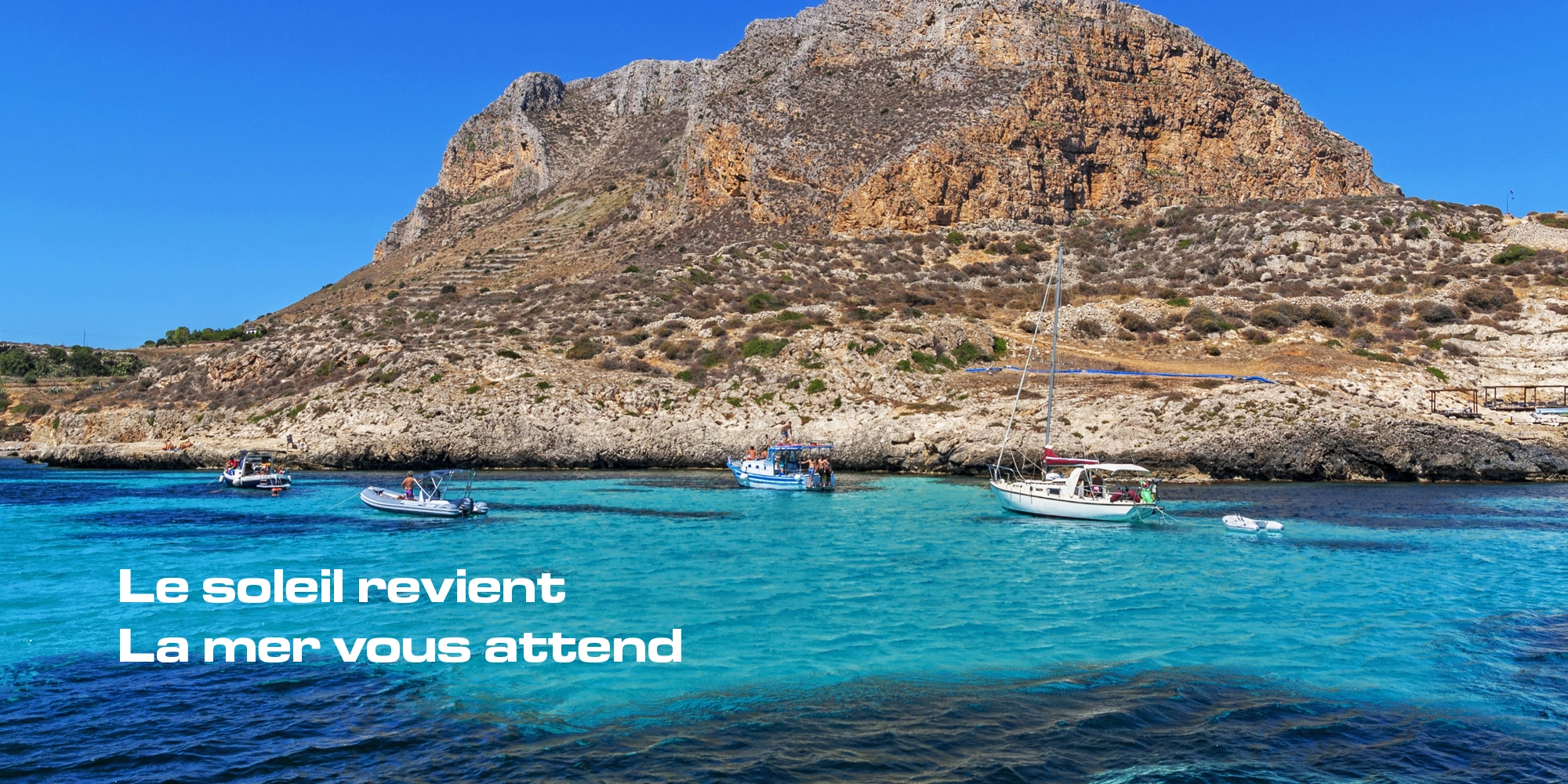
The Sun is coming back
The sea awaits you
After a few months of forced rest, your boat deserves a careful start. What if you really started this season differently — with The silent power of the electric ?
The days are getting longer, the temperatures are rising, and something irresistible is happening in the heads of all boaters and professionals: the desire to go back to sea. After long months of wintering, the nautical season is back on track with the return of spring — and this year, it promises to be under the sign of a silent revolution: that of electric propulsion.
Whether you are sailing on the Atlantic, in the Mediterranean, on the Great Lakes or along French waterways, the scenario is the same: the tarp removed, checklist in hand, and the impatience to find the body of water again. But before casting off, there are steps to follow. What if this year, spring maintenance was also an opportunity to definitively rethink your engine?
Did you know that? According to industry data, a third of sea rescues are caused by propulsion failure. The vast majority of these breakdowns occur in the spring, after a hasty restart. Rigorous winter removal is not a formality: it is a question of safety.
WINTERING
Put your boat back in the water:
The 6 essential steps
From hull inspection to safety check, here is the proven method to approach the season with confidence.
01
🔍 GENERAL INSPECTION OF THE SHELL
Start with a careful examination of the dry hull. Look for gelcoat chips, scratches, and possible signs of osmosis. Check the pass-hulls, the rudder and its fittings. It's the ideal time to do the antifouling again: a fresh coat protects the shell for the whole season. Also replace zinc anodes, sacrificed by galvanic corrosion, to protect the submerged metal parts.
02
⚙️ COMPLETE PROPULSION OVERHAUL
For a combustion engine, the list is long: changing the oil, replacing fuel and oil filters, checking the spark plugs, checking the water pump turbine, inspecting the propeller. For a Weenav electric motor, the procedure is radically different — and infinitely simpler. We'll come back to that below.
03
🔋 CHECKING THE ELECTRICAL FLEET
Check the condition of the utility batteries with a multimeter: voltage, density, condition of the terminals. Inspect all wiring for signs of corrosion or friction. Protect connections with a water repellent spray. Test the main circuit breaker, fuses, shore charger and check that the navigation system is up to date on the map side.
04
🛠️ FITTINGS, MANEUVERS & RIGGING
Grease all moving parts: winches, caumards, jambs, rudder axles. On a sailboat, check the mast, boom bars, guying cables and their tension. Check the condition of the sails and their rope. Inspect the halyards and wires for wear and tear. Rinsing with fresh water followed by drying remains the simplest gesture to extend the life of ropes.
05
🧭 ON-BOARD ELECTRONICS
Reinstall the instruments dismantled for the winter (sounder, log, wind sensors). Test the VHF and make a test call. Check that the GPS is working properly and update the maps. Recalibrate the autopilot compass once the boat is in the water. Also, check the condition of navigation lights and antenna cables.
06
🦺 SAFETY ENDOWMENT
This is the step that is postponed all too often. Check the expiration dates of the emergency flares, the condition of the life jackets and their automatic inflators, the condition of the EPIRB distress beacon and the first aid kit. Check the fire extinguisher. French regulations require specific equipment according to the category of navigation: this is a non-negotiable point before any sea trip.
Ideally plan for this de-wintering two to three weeks before your first outing. Shipyards are very busy in spring, especially for launching cranes: make an appointment early. And once afloat, stay alert for the first few days — the first hours of navigation after wintering are statistically the time when technical problems appear.
THE ELECTRICAL DIFFERENCE
What if you didn't pass
Plus those hours at the construction site?
With a combustion engine, restarting in spring means several half-days of work, liters of used oil to be eliminated, filters to be changed, spark plugs to be checked. With a Weenav electric motor, the logic is completely reversed. Where thermal preparation can take nearly two weeks between revisions, site appointments and tune-ups, an electric motor allows a return to service in less than a day. Overnight, you can decide to start the season again with a simple system check.
Almost non-existent maintenance
Les ARION and KRONOS engines Have approximately 100 times fewer parts mobiles than a thermal equivalent. First maintenance recommended after 5,000 hours of sailing.
Absolute silence
No engine noise, no vibration. Navigation is regaining its essence: the wind, the water, the horizon. Ideal for fishing, marine wildlife viewing, and protected areas with restricted access.
Zero hydrocarbon pollution
No release of oil, fuel, or exhaust into the water. Total preservation of marine ecosystems and access to areas where thermal engines are prohibited or regulated.
Savings from the first season
Charging cost up to 80% lower than fuel. The maintenance cost of an electric motor is close to 0 per year — compared to hundreds of euros each spring for a thermal one.
Immediate torque & maneuverability
Maximum torque is available from the first turn. The maneuvers at the port, the quick accelerations, the response to the commands: everything is more precise, smoother and more intuitive.
Ultra-simplified wintering
No draining, no antifreeze treatment, no fuel stabilization. The end of the next season will be as easy as the beginning. Plug in, unplug, protect: that's all.
With a Weenav electric motor, the lifetime of the system is at least 3 times higher to its thermal equivalent — and spring dewintering comes down to software control.
WEENAV RANGE
ARION & KRONOS
Two engines, all navigations
Designed and assembled in France, the Weenav motors cover all the needs of boating and professional boating — from high performance outboards At high power inboard motor.
OUTBOARD
KRONOS
100% ELECTRIC
The KRONOS is Weenav's 100% electric outboard motor. Powerful, versatile and designed for performance, it is aimed at demanding boaters as well as maritime transport professionals. Its base, specially designed to absorb the high torque of an electric motor, gives it remarkable seaworthiness.
POWER 80 hp (59 kW) — 300 hp (220 kW) continuous
PROPELLER COUPLE 780 Nm
- 400—800 V architecture, 97% motor efficiency
- Recharge up to 2C (from 10% to 90% in 30 minutes)
- Power: up to 22 kW (3-phase 32A)
- CCS combo (up to 200 kW)
- Integrated touch interface on Garmin
- Watertightness: IP67 marine certified
- Retrofit possible on any outboard compatible boat
INBOARD
ARION
ELECTRIC & HYBRID
The ARION inboard motor is the solution. Compact, lightweight and absolutely discreet in the hold, it can be integrated without modifying the structure of the boat. Compatible with all boats initially equipped with an inboard, it is offered in 100% electric or hybrid series version — valuable flexibility for navigators who want a gradual transition.
POWER 50 hp (37 kW) — 500 hp (375 kW) continuous
MAINTENANCE First revision recommended at 10,000 hours
- Mainly software maintenance
- Integrated Garmin touch interface
- Power: Up to 22 kW (three-phase 32A),
- CCS combo (up to 200 kW)
- Recharge up to 2C (from 10% to 90% in 30 minutes)
- IP67 components
- Compatible retrofit without structural modification
CONCLUSION
This season, sail differently
Returning to the water in spring is not just a mechanical constraint: it is a ritual, a promise of navigation, the moment when you regain possession of your boat after winter. For thousands of boaters and professionals, it is also an opportunity to ask themselves a question that was not asked five years ago: is it really useful to keep a combustion engine?
Les Weenav KRONOS and ARION engines provide a concrete answer. They are now tested and proven at the largest French boat shows. Their performances go far beyond the scope of a simple coastal stroll.
The regulatory framework accompanies this transition. Areas where thermal engines are prohibited or highly regulated are multiplying — the Mediterranean, lakes, estuaries. Anticipate this evolution with a electric or hybrid motorization, it also means guaranteeing sustainable access to all bodies of water.
So, whether you're just rolling up your tarp for the first time or if you already have the checklist in hand, take some time this season to think about your motorization. Weenav accompanies each project from A to Z — study, installation via partner sites, financing, grants available according to your sector of activity.
The sea is there. The sun is coming back. And the electric is ready.
Ready to electrify your season?
Configure your engine, discover the available financing or try our engines at sea.
Published on: 18/03/2026
Editor: Sophie Castelain

