
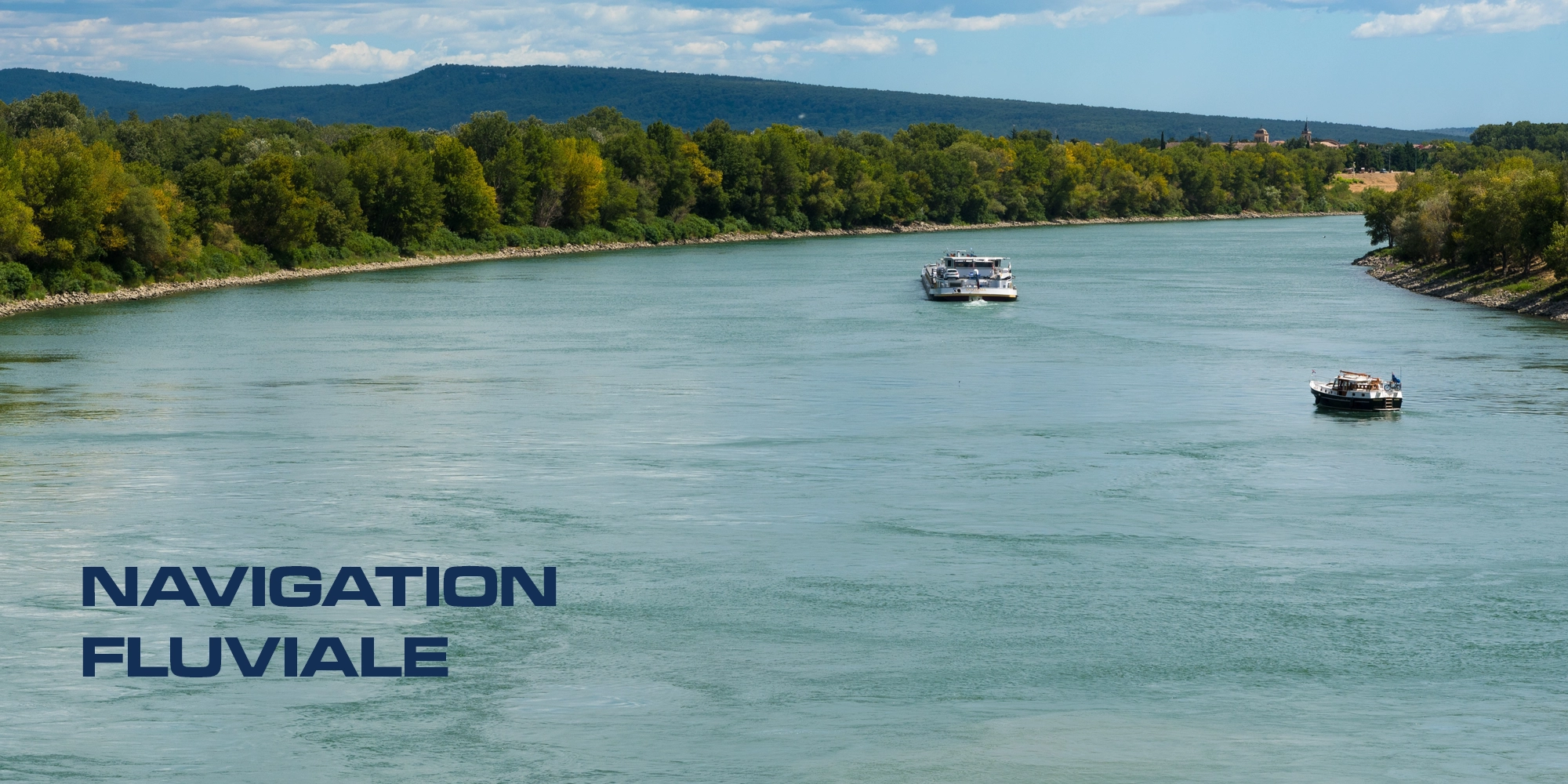
Freight transport, passenger shuttles, service boats... The professional waterway players are facing increasing environmental requirements on a network of 8,500 km of waterways. The electric motor stands out as the most solid technical and economic response.
The French river network: a natural heritage under pressure
France has the longest network of waterways in Europe, with approximately 38,000 km of waterways, of which 8,500 km are navigable, breaking down into rivers, and developed canals, open to the transport of passengers, goods and pleasure boats.
Most of the French network — i.e. 6,700 km — is managed by the public establishment Voies Navigables de France (VNF), which maintains, operates and modernises it: the so-called “magistral” network, 4,100 km long, is dedicated to the transport of goods; the regional network, which is 2,600 km long, is dedicated to the transport of goods; the regional network, which is 2,600 km long, is dedicated to the transport of goods; the regional network, which is 2,600 km long, is dedicated to the transport of goods; the regional network, which is 2,600 km long, is oriented towards tourism.
38,000 km of waterways in France, the first European network
8,500 navigable kilometers, managed mainly by VNF
4,100 km of main freight transport network
This dense network — Canals du Midi, Seine, Rhone, Rhine, Rhine, Moselle, Canal du Nord, Canal Seine-Nord Europe under construction — constitutes a hydraulic and ecological heritage of invaluable value. Vegetated banks, wetlands, biological corridors: waterways host aquatic ecosystems that all navigation activities must preserve. This is precisely where the question of motorization of professional vessels becomes central.
The fluvial sector, above all a professional sector
Contrary to popular belief, river navigation is dominated by professional uses. Yachting represents only a marginal part of the traffic there. River transport offers enormous ecological advantages: a boat carries up to the equivalent of two hundred trucks in a single trip and emits three to five times less CO₂ than the same transport carried out by truck.
Professional vessels that operate on French waterways fall into several categories:
- Cargo boats — pushers, self-propelled vehicles, river convoys — which transport bulk goods, containers or construction materials on the main network.
- Passenger shuttles — urban water buses, inter-bank shuttles, speedboats — operated by local authorities or public service delegates in major cities (Paris, Lyon, Nantes, Bordeaux).
- Service and construction boats — dredges, pump boats, inspection boats, lock and dam maintenance boats operated by VNF or private service providers.
- Dining and cruise boats — operators of long-term river cruises or guided walks, which constitute a segment of professional tourism with a high impact on the environments crossed.
The French professional inland waterway fleet includes around a thousand registered freight boats and around six hundred professional boats, a relatively small fleet but with very high use, which makes the problem of their cumulative environmental impact particularly significant.
The environmental impacts of thermal engines on waterways
A heat engine in a river environment generates several categories of cumulative pollution, all the more harmful as navigation takes place in a confined environment, with little renewal of water.
Oil pollution and spill risks
Each combustion engine contains significant quantities of fuel, engine oils and hydraulic fluids. In the event of damage or improper handling, these substances can flow directly into waterways. The Environmental Code provides for a criminal penalty of up to two years in prison and a fine of €75,000 in the event of the discharge of substances whose action causes harmful effects on health or damage to flora or fauna. The regulations are strict precisely because the risks are real and documented.
Greenhouse gas emissions in a confined environment
River boats have very specific characteristics linked in particular to “navigation in a confined environment”: in locks, canal tunnels and under canal bridges, exhaust gases accumulate. For crews and passengers alike, exposure to nitrogen oxides (NO) and fine particles is a daily reality that combustion engines impose.
Noise pollution and wildlife disturbance
Rivers and canals are home to remarkable wildlife — otters, kingfishers, herons, pikes, eels. The underwater noise generated by propellers and thermal engines disrupts the orientation of fish, their reproduction and their feeding. On a boat with an internal combustion engine, the constant whirring generates between 70 and 90 decibels on average — a noise level that spreads widely in the water and permanently affects the biodiversity of river corridors.
Did you know that? The CDNI Convention (Convention relating to the collection, deposit and reception of waste arising during inland navigation) imposes strict obligations on river operators on the Rhine, Moselle and the routes connected to them. Based on a ban on dumping into surface water, the convention provides detailed rules for the prevention of wastes and specifies responsibilities for their disposal.
The electric motor: the answer to river challenges
La electric propulsion is not simply an alternative to thermal energy — it is a technological breakthrough that meets point by point the specific constraints of professional waterway navigation.
Zero direct emissions, zero hydrocarbons
Les electric motors reduce GHG emissions and hydrocarbon pollution. On waterways, the total absence of fossil fuel on board means the end of the risk of accidental oil spills into waterways. This characteristic is decisive for operators who navigate in Natura 2000 classified areas or near drinking water catchments.
A performance that cannot be compared
The energy efficiency of a electric motor is very high, around 90% and up to 97%. In comparison, heat engines generally have an efficiency of between 20% and 30%, with much of the energy dissipated in the form of heat. For a professional operator whose ship operates many hours a day, this performance differential directly translates into operational savings.
Silence and respect for aquatic biodiversity
Compared to a combustion engine, a electric boat emits less than 50 decibels, the level of a normal conversation. On waterways, this drastic reduction in underwater noise protects aquatic fauna and shoreline species. Urban shuttle operators operating under bridges or in canal tunnels immediately benefit from radically improved working conditions for their crews.
Increased reliability, reduced maintenance
Les electric motors for boats have about a hundred times fewer moving parts than a combustion engine, which reduces wear and requires less maintenance. They have no translational parts, only rotating parts, which significantly reduces wear. For professional operators whose business depends on the availability of their fleet, the reduction of unexpected fixed assets is a decisive advantage.
Retrofit: reducing the carbon footprint of manufacturing
The electric retrofit makes it possible to reduce the GHG emissions associated with the production of a new boat by 56%. For a professional sector that operates units that are sometimes several decades old, the electrical conversion of an existing hull is often more relevant — economically and environmentally — than the acquisition of a new ship.
A profitable investment for professional operators
The profitability of an electric motor on a professional vessel with a high level of use is structurally favorable, for several converging reasons.
- €Energy cost divided: The cost of recharging an electrical system is up to 80% lower than the equivalent cost of diesel fuel. On shuttles that make several daily rotations, the annual savings can be considerable.
- ↓ Drastically reduced maintenance: The lifespan of an electrical system is at least three times longer than its thermal equivalent, and the first maintenance of the ARION only takes place after 10,000 hours of navigation. No drain, no filter, no timing belt.
- +Access to new navigation areas: Some protected areas or bodies of water are forbidden to use by thermal engines. Electric propulsion opens access to routes or markets that are inaccessible to thermal fleets.
- ✓ Anticipation of environmental standards: Inland waterway transport must adapt to new environmental standards, or even anticipate them, in order to maintain its natural competitive advantage. Electrifying today means complying for tomorrow.
Regulatory compliance: ES-TRIN standards and certifications
On the European waterways, professional vessels are subject to technical standards ES-TRIN (European Standard defining the Technical Requirements applicable to Inland Navigation vessels), which sets out in particular the requirements relating to propulsion systems.
Les Weenav electric motors comply with ES-TRIN standards for inland waterways and the regulatory divisions concerned for maritime transport, depending on the type of boat. This compliance is a non-negotiable prerequisite for any professional operator wishing to maintain the validity of their navigation document.
Each motor is waterproof (IP67 components) and CE certified (European Conformity). Weenav offers a two-year warranty (with the possibility of extension) and a remote after-sales service with direct intervention on the boat if necessary.
In addition, Weenav offers a Garmin energy management system, allowing total controllability of energy management and of each component of each subsystem. This traceability is valuable for operators subject to environmental reporting obligations or who respond to public tenders integrating CSR criteria.
Electrify your waterway fleet with Weenav
Passenger shuttles, service boats, construction boats: our teams size your electric propulsion system according to your real operating cycles, tailor-made.
Posted on 15/04/2026
Editor: Sophie Castelain

